
Buying or selling property in Queensland involves more than just agreeing on a price and signing contracts. Understanding your legal obligations before settlement can mean the difference between a smooth transaction and a costly dispute that derails everything.
The seller disclosure requirements QLD legislation introduced through the Property Law Act 2023 represent one of the most significant reforms to Queensland's conveyancing landscape in decades. From 1 August 2025, sellers must provide buyers with a completed Form 2 Disclosure Statement before a contract is signed, a shift that changes how both parties approach property transactions.
This guide walks you through exactly what Form 2 requires, which properties are affected, what happens if disclosures are incomplete or inaccurate, and how to navigate the process with confidence. Whether you are a homeowner preparing to sell, a buyer wanting to understand your rights, or a professional brushing up on the new framework, you will leave with a clear, practical understanding of your obligations and protections. Let's break it all down step by step.
What Changed on 1 August 2025
Until 1 August 2025, Queensland operated under a largely caveat emptor framework, placing the burden of pre-contract investigation firmly on buyers. That changed fundamentally when the seller disclosure scheme under the Property Law Act 2023 came into force, making Queensland one of the last Australian states to introduce a mandatory pre-contract disclosure regime. The reform aligns Queensland with the standard long applied in most other jurisdictions, closing a significant gap that had left Queensland buyers with comparatively limited visibility into a property's legal position before signing a contract.
The scale of what changed should not be underestimated. National law firm Holding Redlich describes the Property Law Act 2023 as bringing "a major overhaul of Queensland's property laws," with the seller disclosure scheme characterised as one of the most significant changes introduced under the Act. Allens frames the shift as moving from "buyer beware" to transparent transactions, capturing precisely how the burden has moved. Where buyers once carried the responsibility of uncovering encumbrances, rates obligations, and title issues through their own inquiries, sellers must now proactively disclose prescribed information before any contract is signed.
At the centre of the new scheme is the Seller Disclosure Statement, formally designated Form 2. REIQ CEO Antonia Mercorella has confirmed that Form 2 compliance is mandatory, stating plainly that "no contract clause can override or delay this legal requirement." This is a critical point for agents who might assume that a well-drafted special condition could manage timing obligations or substitute for a compliant disclosure. It cannot.
One practical detail worth noting: the Queensland Government updated the official Form 2 on 21 July 2025, just ten days before the scheme commenced. That timing signals the compliance environment was still maturing at launch, and practitioners who were not actively monitoring regulatory updates risked working from an outdated form from day one. Staying current with the prescribed form version is not a minor administrative point; it is a foundational compliance requirement under the new regime.
What Is a Form 2 Seller Disclosure Statement?
Form 2 is a prescribed document under Queensland's Property Law Act 2023, and its purpose is straightforward: it gives buyers verified, authoritative information about a property before they commit to a purchase contract. What makes Form 2 significant is its legal status. This is not an optional courtesy or a best-practice checklist. It is a legally binding disclosure document, and sellers who provide inaccurate, incomplete, or misleading information face serious exposure, including contract cancellations, legal penalties, and claims of misleading conduct under the Act. The obligation to disclose cannot be contracted out of, modified by agreement, or waived by any clause inserted into the contract.
What a Compliant Form 2 Must Contain
A compliant Form 2 draws on searches and certificates sourced directly from relevant government authorities, and each item must be current at the time of disclosure. The prescribed content covers the certificate of title and any registered encumbrances on the land, easements and covenants affecting the property, current local government rates and charges, land tax notices, zoning and planning certificates, contaminated land register searches, and any statutory notices that have been issued against the property. For properties within a body corporate scheme, additional disclosure is required through a separate Body Corporate Disclosure Statement (Form 33 or Form 34), which addresses levies, by-laws, and financial records specific to the strata arrangement. The Queensland Law Society's published FAQs on seller disclosure forms confirm the breadth of these obligations and reflect how much practitioner attention this new regime has generated since commencement.
What Form 2 Does Not Cover
Buyers relying solely on Form 2 to inform their purchasing decision will be missing critical information. Flood history, building defects, the presence of asbestos, and pest-related matters all fall entirely outside the Form 2 scope. The prescribed searches are focused on legal and statutory interests affecting title; they do not assess the physical condition of the structure or environmental risks associated with the land. Buyers remain independently responsible for commissioning building and pest inspections, flood reports, and any other due diligence inquiries not captured by the required searches.
Timing and Assembly Requirements
The timing rule carries no flexibility: the completed Form 2 must be in the buyer's hands before the contract is executed. It cannot be attached as a condition of the contract, delivered after signing, or replaced with a verbal summary of its contents. Because each search must be current and sourced from the issuing authority, assembling a compliant Form 2 means ordering multiple certificates from different government bodies and compiling them accurately into the prescribed format. The practical complexity of this process is one reason the market has shifted toward platforms that handle the full disclosure workflow in one place, rather than requiring sellers or agents to coordinate searches piecemeal across government portals.
Which Properties Are Covered — and Which Are Exempt
The scheme introduced under the Property Law Act 2023 casts a significantly wider net than many practitioners initially assumed. The Form 2 obligation applies to residential properties including houses, townhouses, and units, but it extends equally to commercial properties and vacant land. As Clifford Gouldson Lawyers confirm, the regime applies to "the sale of all land (commercial, rural and residential) unless one of the very limited exemptions applies." Agents who have approached this as a residential-only compliance exercise are operating on a misreading of the law, and that misreading carries real consequences for their clients and their own professional standing.
Exemptions Are Narrow and Not Publicly Listed in Full
Certain transactions do fall outside the Form 2 requirement, but the exemptions are deliberately limited. Known categories include sales between related parties in specific circumstances, certain compulsory acquisition scenarios, and transactions where the property falls outside the Act's definition of "land" being sold under a regulated contract. The Queensland Government's scheme page acknowledges that exemptions exist without enumerating them comprehensively, which creates a significant information gap for practitioners. Rather than treating the government overview as a complete compliance guide, anyone dealing with an unusual transaction type should go directly to the Property Law Act 2023 or obtain independent legal advice before concluding that an exemption applies. The qld.gov.au page itself recommends sellers seek independent legal advice about their specific obligations, which is an important signal that the published guidance is a starting point, not a definitive answer.
Off-the-Plan and New Lot Sales Require Separate Verification
Off-the-plan sales and new lot contracts interact with the disclosure scheme but operate under distinct requirements that are not identical to the standard Form 2 process. Developers and project agents working on staged releases or greenfield lots should not assume that their existing contract documentation satisfies the Form 2 obligation without specific verification. The applicable requirements depend on the contract type, and the consequences of getting this wrong are the same as for any other non-compliant sale. As REIQ CEO Antonia Mercorella has stated publicly, no contract clause can override or delay this legal requirement, which applies equally to developer contracts.
Wrongly Claiming an Exemption Is Its Own Risk
Perhaps the most important point for practitioners is this: misidentifying a property as exempt does not reduce liability, it creates it. If a seller proceeds to contract without a Form 2 on the assumption that an exemption applies, and that assumption proves incorrect, the buyer's right to terminate is activated immediately, exactly as it would be for a missing or defective disclosure. That termination right extends all the way to settlement, well beyond the standard five-business-day cooling-off period. Sellers may also face exposure under Australian Consumer Law for misleading conduct. The prudent position, particularly for uncommon transaction structures, is to verify exemption status through the Act or qualified legal advice before proceeding without a disclosure statement.
Body Corporate Properties: Form 33 and Form 34
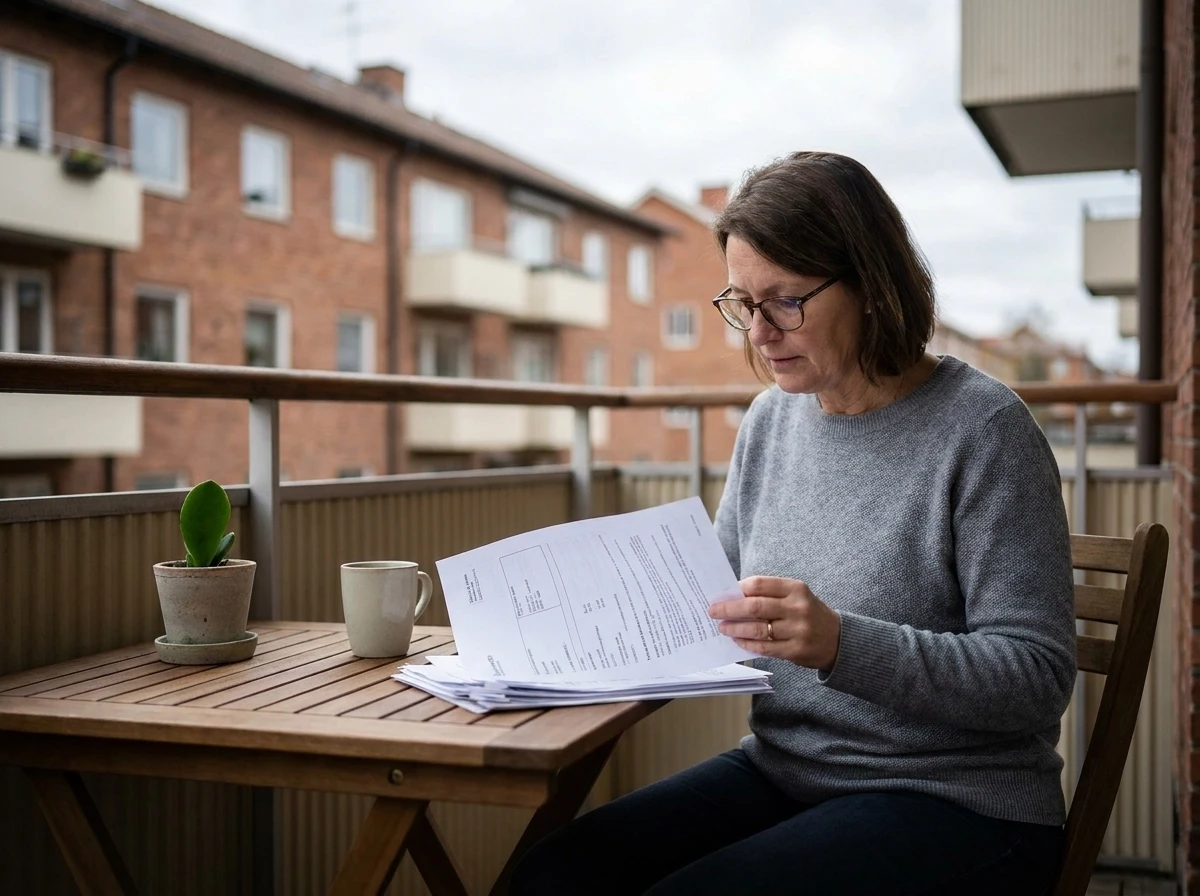
For sellers of units, townhouses, apartments, and other lots within a community titles scheme, the Form 2 Seller Disclosure Statement is only part of the compliance picture. Queensland's Property Law Act 2023 also requires sellers to provide a Body Corporate Certificate as a mandatory attachment to the Form 2 package, and that certificate must be in the correct prescribed form before the buyer signs the contract.
Form 33 vs. Form 34: Choosing the Right Certificate
The form required depends on the type of community titles scheme the lot belongs to. Form 33 applies to the vast majority of community titles schemes, including those governed by the Accommodation, Standard, Commercial, and Small Schemes regulation modules. This covers most apartment buildings, townhouse complexes, and multi-lot developments. Form 34, by contrast, applies exclusively to two-lot schemes, which are typically duplex-style or paired-lot arrangements that often have no professional manager, simplified financial structures, and shared insurance responsibilities between the two lot owners.
Using the wrong form is not a minor administrative oversight. If Form 33 is attached where Form 34 is required, or vice versa, the disclosure package is treated as defective. As with any incomplete or inaccurate disclosure, a defective body corporate certificate preserves the buyer's right to terminate the contract without penalty all the way to settlement. Sellers and agents should also note that the Community Management Statement must accompany the certificate as part of the complete package. The practical guidance on when Form 33 vs. Form 34 applies is essential reading for anyone handling a unit or townhouse sale.
What the Certificate Must Cover
Form 33 requires disclosure of current levies and any outstanding levy amounts, sinking and administrative fund balances, insurance policies held by the body corporate, any relevant notices or orders, and body corporate debts. Form 34 covers a simplified equivalent suited to two-lot schemes, including contributions payable, insurance arrangements, and any outstanding disputes or debts between the two owners. This information does not sit in any single government portal; it must be obtained directly from the body corporate manager for the scheme, which introduces a third-party dependency and genuine lead time into the pre-contract preparation process.
The "Form 2 Only" Error Agents Must Avoid
One of the most significant compliance risks emerging post-August 2025 is agents treating a unit or townhouse sale as requiring only a Form 2, without recognising the additional obligation to attach the correct body corporate certificate. This leaves the disclosure package incomplete. An incomplete package carries the same consequence as a missing or inaccurate Form 2: the buyer retains the right to walk away from the contract, without penalty, right up until settlement. That exposure period far exceeds the standard five-business-day cooling-off period and represents a material risk to any transaction.
Coordinating the body corporate certificate alongside the Form 2 adds meaningful process complexity. Platforms that manage the complete disclosure workflow, ordering the correct certificate from the scheme manager and assembling it with the Form 2 and Community Management Statement, reduce the risk of an incomplete package reaching the buyer at a critical point in the transaction.
Who Is Responsible for Preparing the Form 2?
The disclosure obligation under Queensland's Property Law Act 2023 sits unambiguously with the seller. When a seller signs the Form 2, they are taking legal ownership of every statement in that document, regardless of who gathered the information, ordered the searches, or physically assembled the form. If the disclosure contains errors, omissions, or outdated information, the seller faces the primary consequences: a buyer exercising their right to terminate the contract without penalty, potentially at any point up until settlement. That termination right extends well beyond the standard 5-business-day cooling-off period and represents a far more serious exposure than many sellers initially appreciate. The Queensland Government's own guidance directs sellers to seek independent legal advice before completing their obligations, which signals how seriously the legislature views accuracy in this process.
Real Estate Agents: Permitted, But Exposed
Real estate agents can prepare a Form 2, and nothing in the Property Law Act 2023 prohibits them from doing so. The practical risk, however, is substantial. The REIQ has confirmed that errors or omissions in the Form 2, even unintentional ones, can expose agents and their agencies to claims of misrepresentation or misleading conduct under Queensland's property compliance framework. The Form 2 requires disclosure of technical matters including easements, statutory notices, contaminated land records, and zoning designations; these are areas traditionally handled by legal practitioners rather than sales agents. An agent who assembles the Form 2 independently, without legal oversight, carries that liability exposure personally and through their agency, and it is worth considering whether standard real estate professional indemnity policies were structured with Form 2 preparation risk in mind.
Solicitors, Conveyancers, and the Turnaround Problem
Legal practitioners are naturally positioned to prepare the Form 2 as part of a vendor's conveyancing engagement. Solicitors and licensed conveyancers understand the legislative framework, carry their own professional indemnity coverage, and are trained to interpret title searches and statutory certificates. The operational challenge is not competence; it is timing. Searches must be ordered from multiple government bodies, tracked, and assembled before the property can be listed, creating real pressure on conveyancing workflows in a market where listing timelines are compressed.
The Third-Party Platform Model and Professional Indemnity
SearchX operates under law firm oversight, meaning every Form 2 produced through the platform carries legal accountability and professional indemnity coverage attached to the output from the outset. This is a materially different liability position compared to an agent assembling the document independently or a conveyancing practice managing the search-ordering process manually across multiple portals. For agents, law firms, and sellers who want the disclosure handled correctly without building the workflow from scratch, the supervised platform model resolves the accountability question in a way that a self-assembled document simply cannot.
The question of who prepared the Form 2 and under what supervision is directly relevant when a contract termination or misrepresentation claim arises. Buyers, their solicitors, and insurers will look at the chain of preparation when assessing where liability falls. That accountability question is anything but academic once a contract is in dispute.

Consequences of Non-Compliance
The most immediate and commercially significant consequence of a defective Form 2 is the buyer's right to terminate the contract without penalty. Unlike the standard 5-business-day cooling-off period that applies to ordinary residential contracts, this termination right is not time-limited. Where a Form 2 is missing, incomplete, or materially inaccurate, the buyer can walk away from the transaction at any point right up to and including the day of settlement, with no obligation to pay damages or forfeit their deposit. This means a disclosure defect is not a risk that resolves once contracts are exchanged. It is a live, open-ended exposure that shadows every stage of the transaction, from signing through finance approval, building and pest inspections, and final settlement. Sellers and their agents who proceed with a flawed Form 2 are effectively allowing that risk to accumulate across the entire transaction lifecycle.
Financial penalties sit alongside the termination risk as a separate and concurrent consequence. Sellers who fail to provide a compliant Form 2 face statutory penalties under the Property Law Act 2023, in addition to the practical and commercial damage of a collapsed transaction. The specific penalty amounts and the circumstances in which they apply are addressed in SearchX's dedicated post on seller disclosure penalties, which is the appropriate reference for practitioners who need to understand the full penalty framework in detail.
Agent exposure is a distinct and serious layer of risk that deserves attention in its own right. Agents who prepare or contribute to an inaccurate Form 2 face potential claims of misleading or deceptive conduct under both property law and consumer law frameworks. As Wallace and Wallace Lawyers confirm, these claims can survive the transaction itself and result in compensation orders, meaning an agent's liability does not simply end once settlement occurs. REIQ CEO Antonia Mercorella has publicly warned that no contract clause can override the Form 2 obligation, characterising compliance as a matter of legal standing and professional reputation, not merely administrative process.
Post-settlement exposure is the dimension of this regime that is most commonly underestimated. A buyer who discovers after settlement that the Form 2 contained material inaccuracies may retain grounds for legal action against the seller and, depending on their level of involvement, against the agent or preparer. The disclosure obligation does not expire at the handover of keys.
The compliance risk is not theoretical. The Queensland Law Society's Proctor publication was already fielding and publishing practitioner FAQs on Form 2 issues before the scheme had even reached its first month of operation, and as this analysis of the Queensland property law changes confirms, the reform represents one of the most significant shifts in decades. The volume and frequency of those practitioner questions strongly signals that contract terminations and disputes were already materialising in the market within weeks of commencement. For sellers, agents, and conveyancers, treating Form 2 compliance as a secondary administrative step is not a sustainable position.
The Manual Approach vs. Using a Disclosure Platform
Preparing a Form 2 manually is a multi-step coordination exercise that begins well before a contract is drafted. The preparer, whether an agent, conveyancer, or seller, must independently access multiple government portals to order each prescribed search and certificate: title and survey records, local government rates, land tax certificates, contaminated land registers, zoning and planning documents, and any applicable statutory notices. Each portal operates on its own timeline, its own format, and its own fee structure. There is no unified system connecting them, which means every search must be tracked individually and followed up if delayed.
The timing risk embedded in this process is substantial. Individual certificates can take anywhere from one to several business days to process, and government portals are not immune to backlogs or technical issues. Because the Form 2 must be complete and provided to the buyer before a contract is signed, a single missing or outdated search result is enough to render the entire disclosure non-compliant. That outcome does not simply create an administrative inconvenience; it forces the process to restart, which can delay a listing going to market or push back contract exchange at a critical point in negotiations.
Beyond the timing risk, the manual approach carries no built-in compliance layer. The person assembling the Form 2 must independently verify that every prescribed item is present, correctly attributed, and formatted to the requirements of the Property Law Act 2023, without any systematic check to catch gaps. For agents in particular, this creates meaningful personal liability exposure. As covered in the previous section, errors or omissions in a Form 2, even unintentional ones, can give buyers a right to terminate right up to settlement.
Disclosure platforms address these risks by centralising the entire workflow into a single system. With SearchX, searches are ordered, tracked, and compiled on the platform, the output is reviewed under law firm oversight, and the completed Form 2 is delivered ready for signing. The Queensland Seller Disclosure Regime has driven rapid adoption of this model across the industry. With more than 200 agencies already using SearchX, and the majority of disclosure reports delivered within 24 hours, the platform approach has become the practical standard for agents who want compliance confidence without carrying the assembly burden themselves. In 2026, the question for agents and conveyancers is less about whether to use a platform and more about which one provides the legal oversight and workflow reliability their listings require.
Common Mistakes Agents and Sellers Are Making in 2026
Now approaching its first full year of operation, Queensland's mandatory seller disclosure scheme has exposed a consistent pattern of errors that are placing transactions at serious risk. These are not edge cases. Legal practitioners and industry commentators are reporting that the same mistakes are recurring across the market with notable frequency.
Delivering Form 2 After the Contract Is Signed
The most consequential procedural error is timing. The Property Law Act 2023 requires the seller to deliver a completed Form 2 to the buyer before the buyer signs the contract. Providing it afterwards, even moments afterwards, immediately activates the buyer's statutory right to terminate. The accuracy of the form's content is irrelevant once the timing breach occurs. Agents who have carried forward pre-August 2025 workflows treating disclosure as a post-contract administrative step are particularly exposed to this error.
Omitting Body Corporate Disclosure for Units and Townhouses
For strata-titled properties, the Form 2 alone is not sufficient. A Form 33 or Form 34 body corporate disclosure is also required, yet this remains one of the most frequently observed omissions in the scheme's first year. Some agents are unaware the additional obligation exists at all. Others know the requirement but underestimate the lead time needed: body corporate managers typically require advance notice to produce records, meaning agents who begin the process only after a buyer is found will routinely miss the pre-contract deadline.
Using a Superseded Version of Form 2
The Queensland Government updated Form 2 on 21 July 2025, just days before the scheme commenced. Using an earlier version is a compliance error regardless of whether the substantive information disclosed is entirely accurate. The scheme is still maturing, and further form refinements remain possible. Agents and sellers should source the current form directly from official Queensland Government channels rather than relying on saved templates.
Attempting to Override the Obligation by Special Condition
A persistent misconception is that a special condition inserted into the contract can defer or substitute for pre-contract disclosure. REIQ CEO Antonia Mercorella addressed this directly, confirming that no contract clause can override or delay the pre-contract delivery requirement. The obligation sits in statute, above the contract itself, and is not available for the parties to modify.
Treating Form 2 as a Self-Declaration
Finally, many sellers are completing the Form 2 from memory or relying on outdated records rather than obtaining current certificates from authorised sources. This creates dual exposure. The buyer retains termination rights if the information is inaccurate, and the seller faces potential misrepresentation liability under Australian Consumer Law. Form 2 is a verified disclosure document, not a statutory declaration based on recollection. The certificates attached to it must be current and sourced from authorised providers at the time of disclosure.
Staying Compliant With Queensland's Seller Disclosure Requirements
Queensland's seller disclosure requirements under the Property Law Act 2023 are clear and non-negotiable. Form 2 must be completed accurately, kept current, and delivered to the buyer before the contract is signed. For properties within a community titles scheme, that obligation extends further: Form 33 or Form 34 must also be included as part of the disclosure package. No contract condition can defer or override this requirement.
The compliance stakes are significant. A defective, incomplete, or missing Form 2 gives the buyer a termination right that extends all the way to settlement, well beyond the standard 5-business-day cooling-off period. Both sellers and their agents carry legal and financial exposure when disclosure falls short, whether through inaccuracy, missing documents, or incorrect form selection.
For agents and conveyancers managing disclosure across multiple listings or clients, manually ordering searches and assembling documents across separate government portals introduces unnecessary delay and compliance risk. A centralised platform with law firm oversight is the most defensible approach, providing a single, auditable workflow from search to signed document.
SearchX handles the full Form 2 disclosure workflow in one place. Searches are ordered, documents are compiled, and the completed statement is delivered ready for signing under law firm oversight. Order your compliant disclosure statement through SearchX and remove the compliance risk from your next transaction.
Conclusion
Queensland's new seller disclosure framework marks a turning point in how property transactions are conducted. Understanding Form 2 is no longer optional; it is a legal requirement that protects both buyers and sellers from costly disputes down the track.
The key takeaways are clear: sellers must provide a completed Form 2 Disclosure Statement before any contract is signed, accuracy and completeness are non-negotiable, and non-compliance carries serious consequences including contract termination and financial penalties.
Whether you are preparing to list your property or entering the market as a buyer, getting ahead of these requirements is the smartest move you can make before 1 August 2025 arrives.
Speak with a qualified Queensland conveyancer or property solicitor today to ensure your next transaction is fully compliant, legally sound, and set up for success from the very first step.